

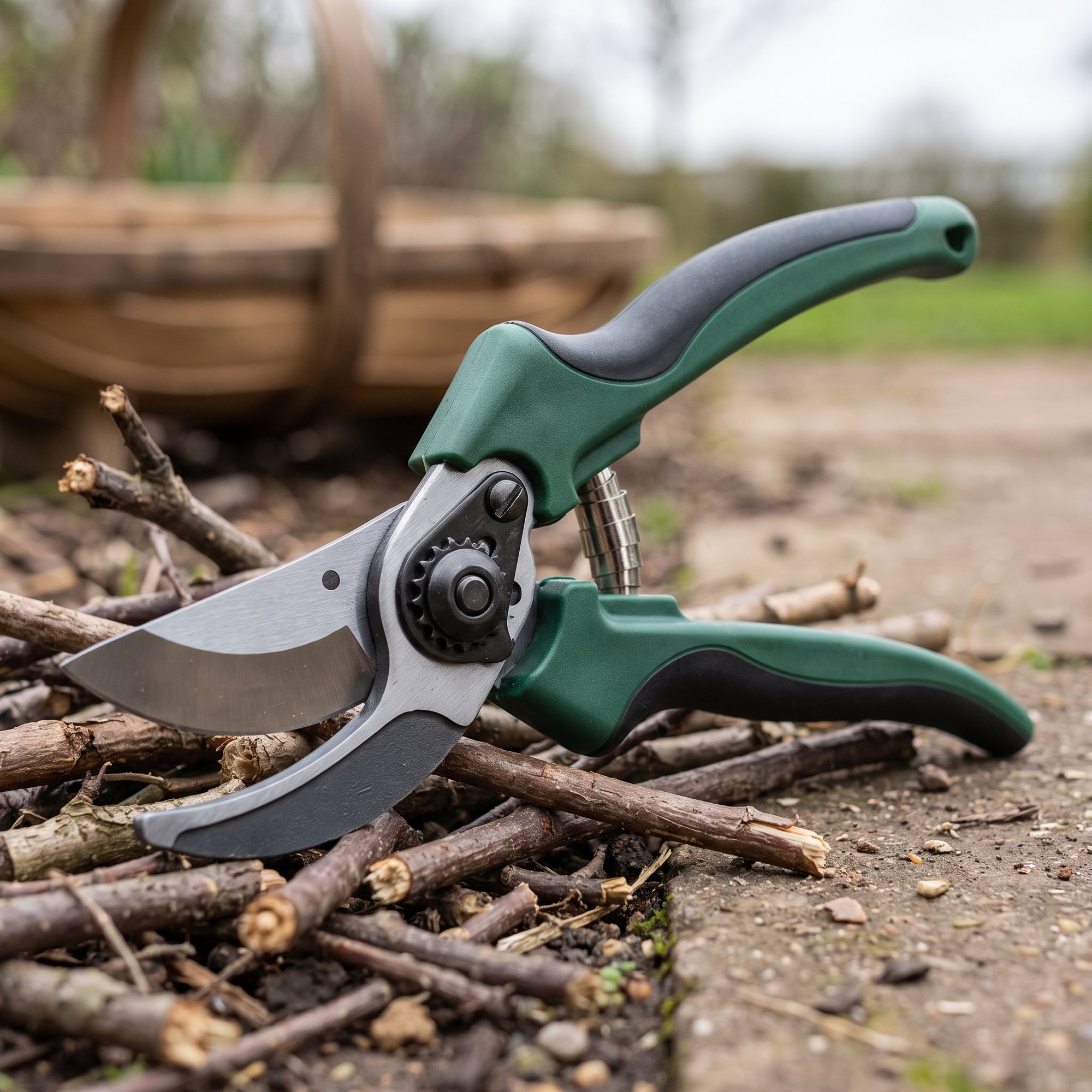
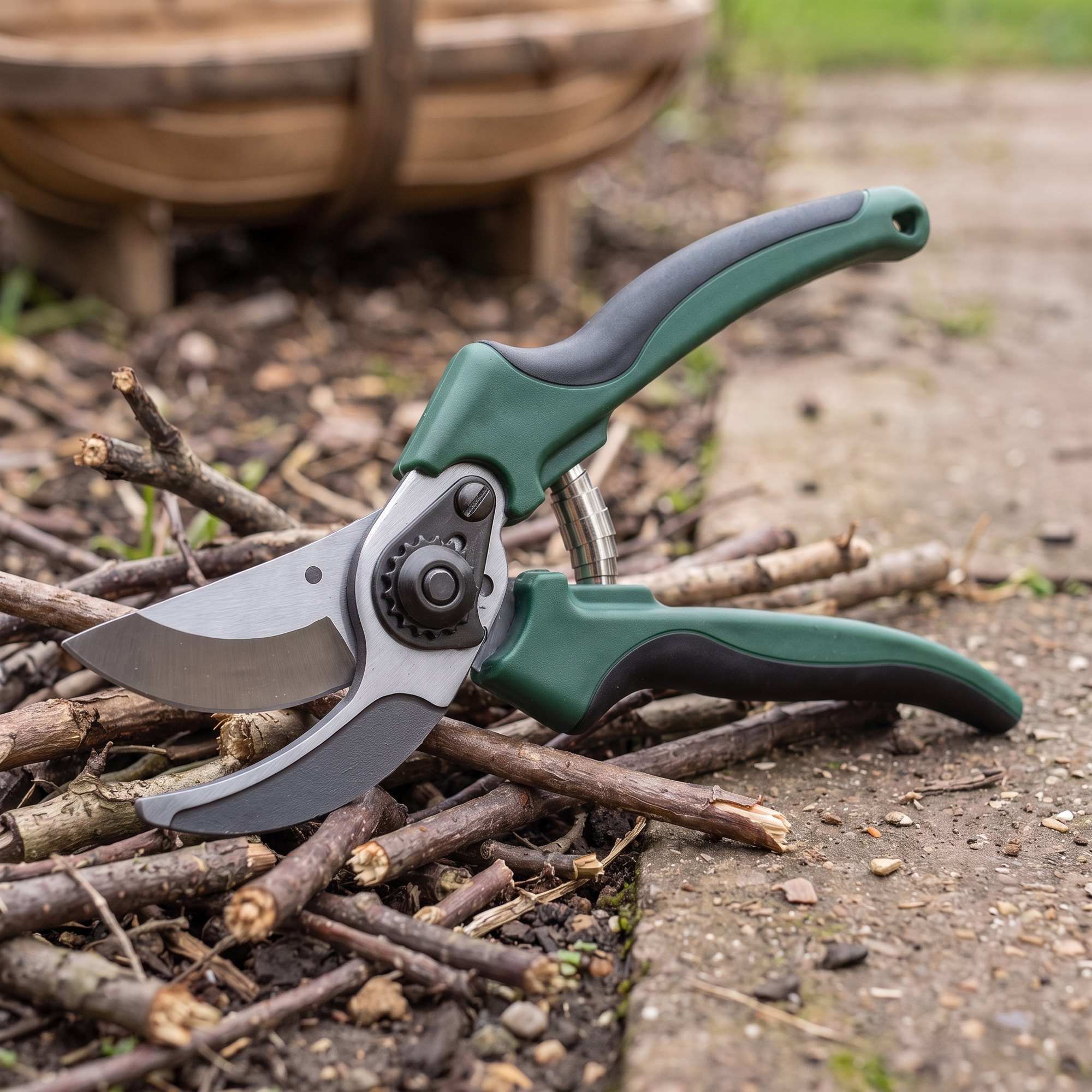
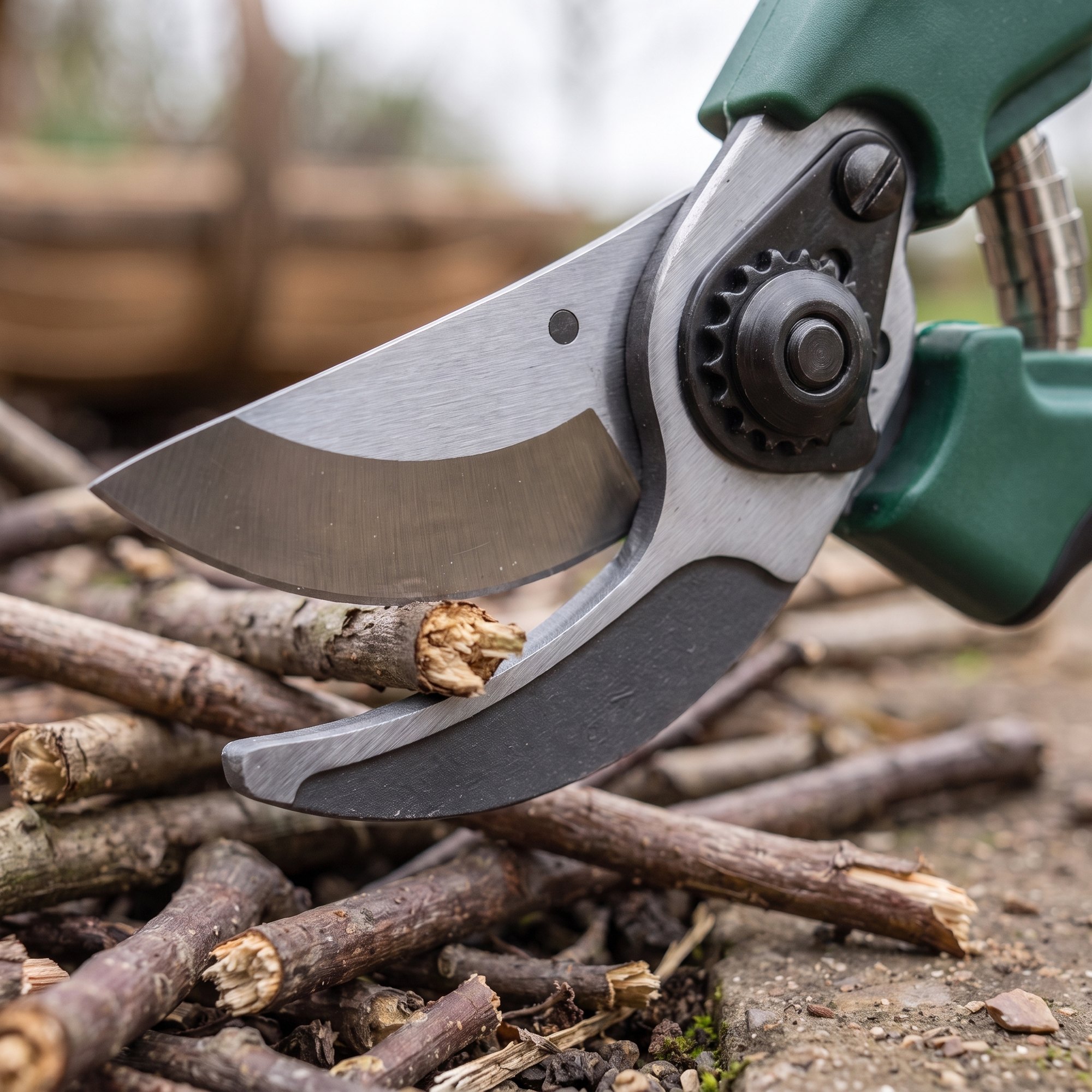
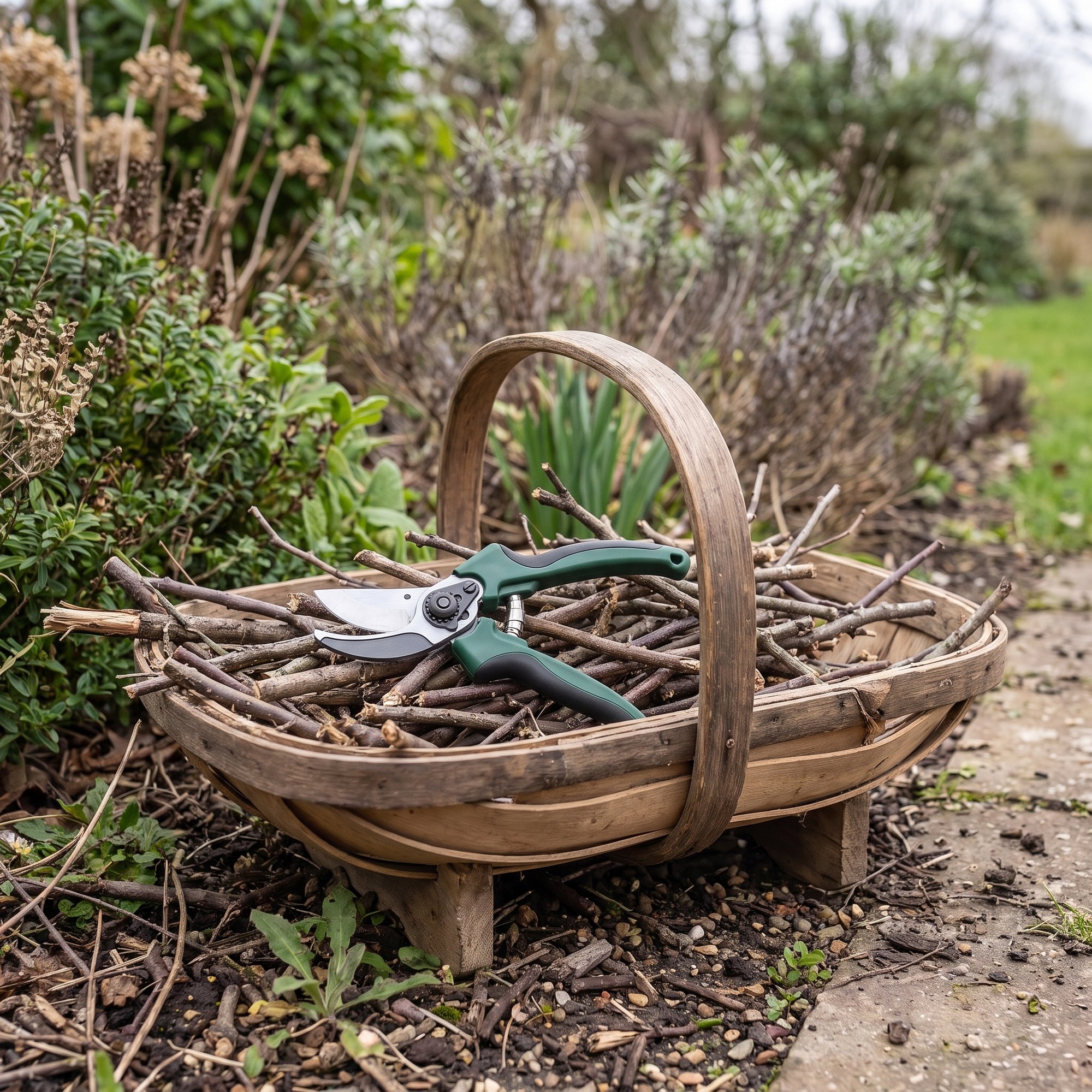
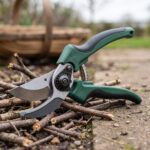
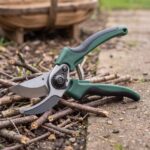
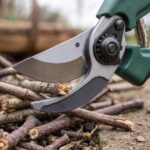
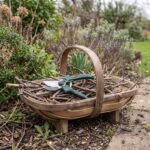
An anvil head closes a hardened blade onto a flat bed rather than past a hook. That crushes live wood, which is why we would not use it on a rose – but on dry deadwood, where there is nothing left to damage, it is the more efficient cut, and the ratchet makes it possible without brute strength.
The Orchard cuts in stages. Squeeze once and the mechanism holds; release, squeeze again and it advances further into the wood. Four squeezes will take a 1 in. dry branch that would stop a conventional pruner dead. If you have arthritis, a weak grip or simply a lot of deadwood to clear, this is the tool that stops the job being a fight.
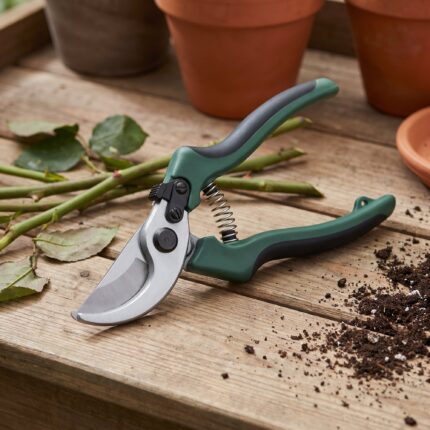
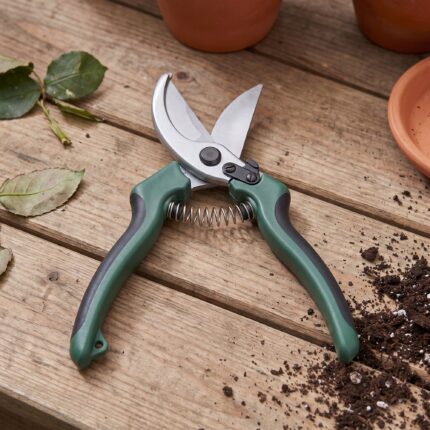
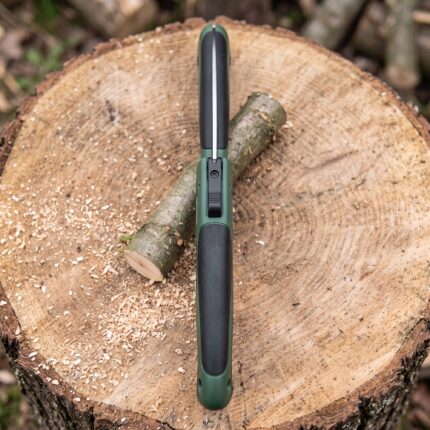
The blade is hardened carbon steel with a non-stick coating, and it sits on a replaceable anvil so you can renew the bed rather than the tool. Handles are wide, moulded and shaped to spread the load across the whole palm instead of loading the base of your thumb, and a thumb catch locks them shut for the pocket.
Specifications
| Overall length | 8 in. |
|---|---|
| Cutting type | Anvil with ratchet mechanism |
| Cutting capacity | Dry wood up to 1 in. |
| Blade | Hardened carbon steel, non-stick coating |
| Anvil | Replaceable |
| Handles | Wide moulded grips, thumb lock |
| Weight | 0.8 lb |
| Dimensions | 8 x 3 x 1 in. |
Care
Use it on dead and dry wood; for anything green and living reach for the Fieldstone bypass pruner instead. Clear the debris out of the ratchet teeth after each session with a stiff brush – grit in the mechanism is what makes a ratchet slip. Wipe the blade with oil, and replace the anvil when the blade starts leaving a ridge instead of parting the wood.
Reviews
There are no reviews yet.