

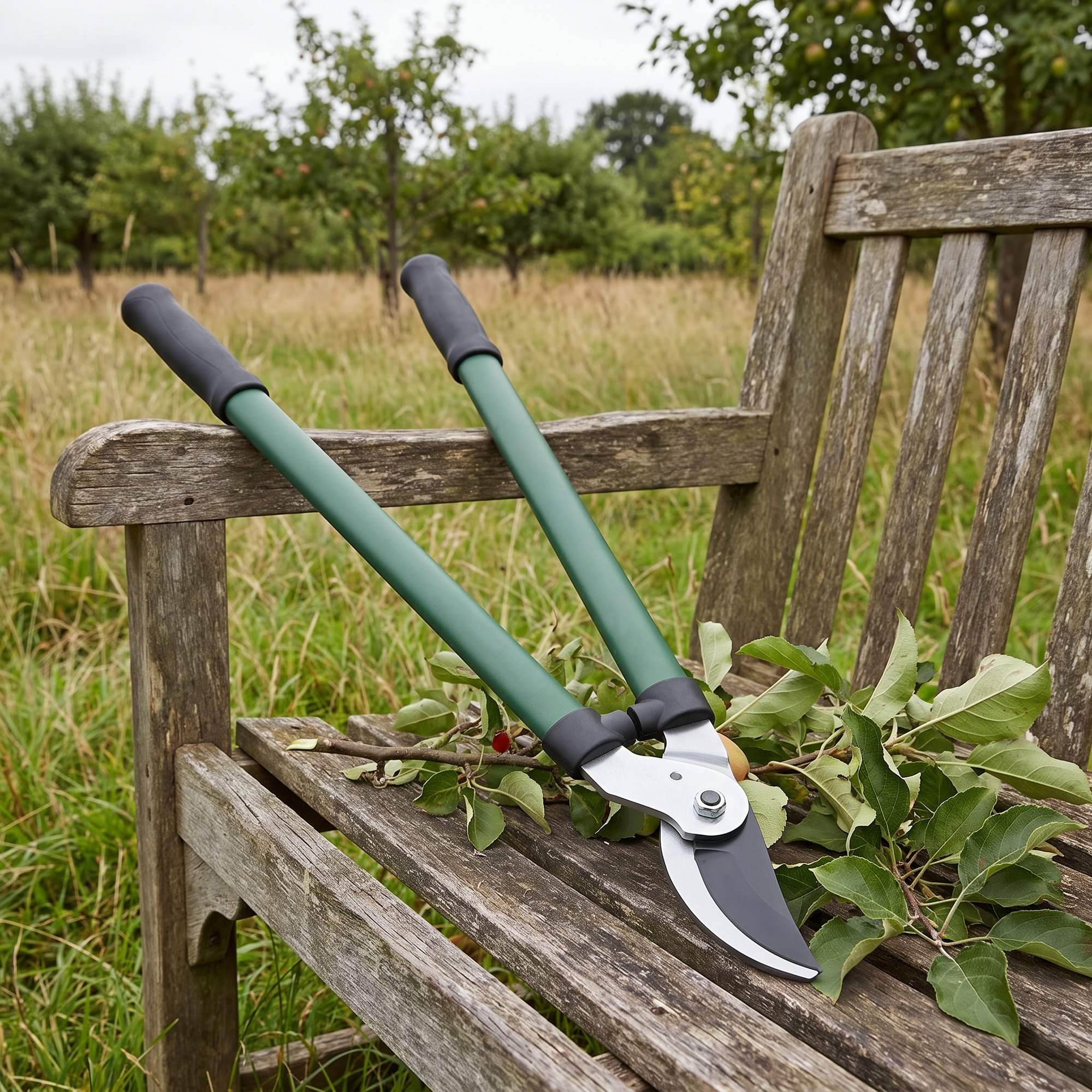
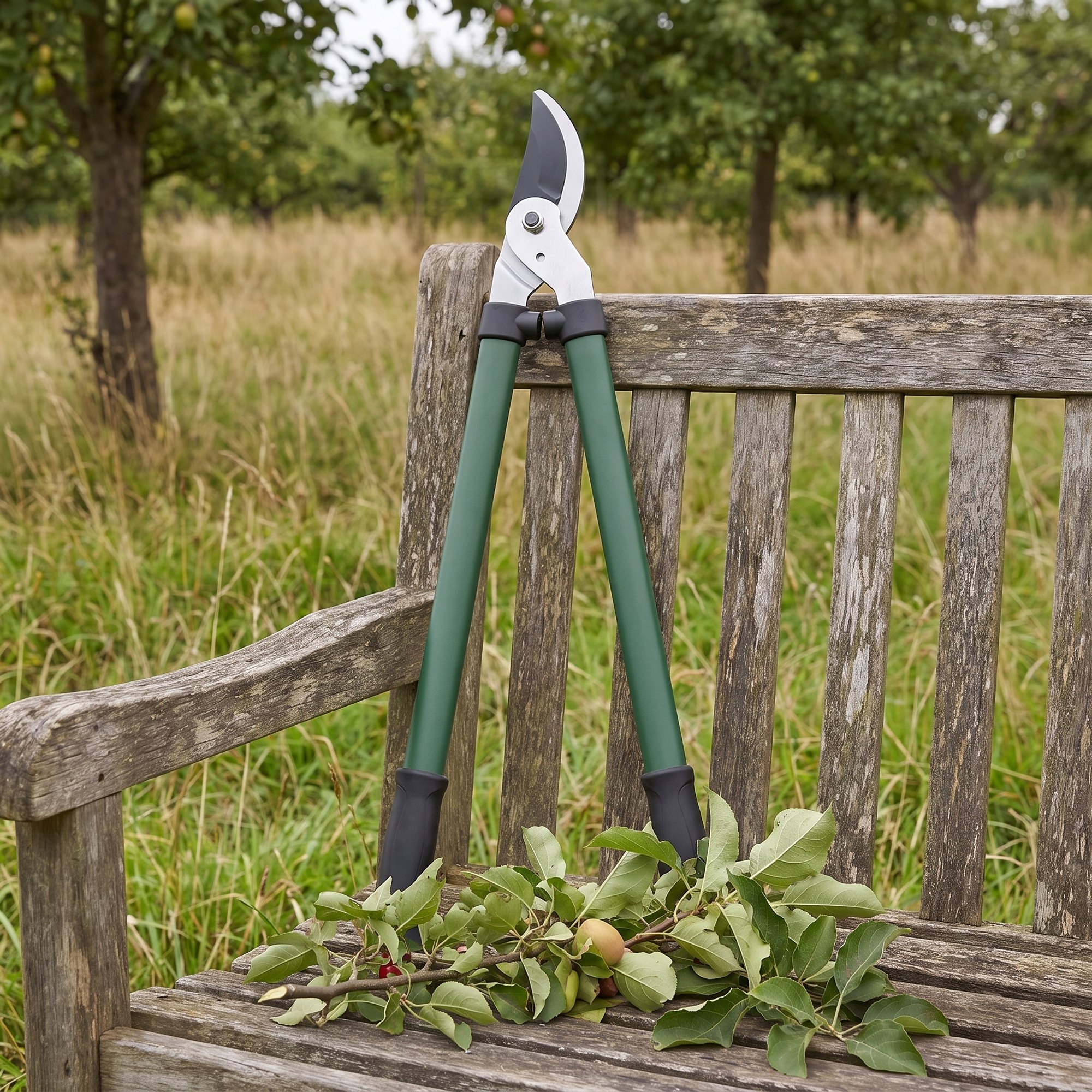
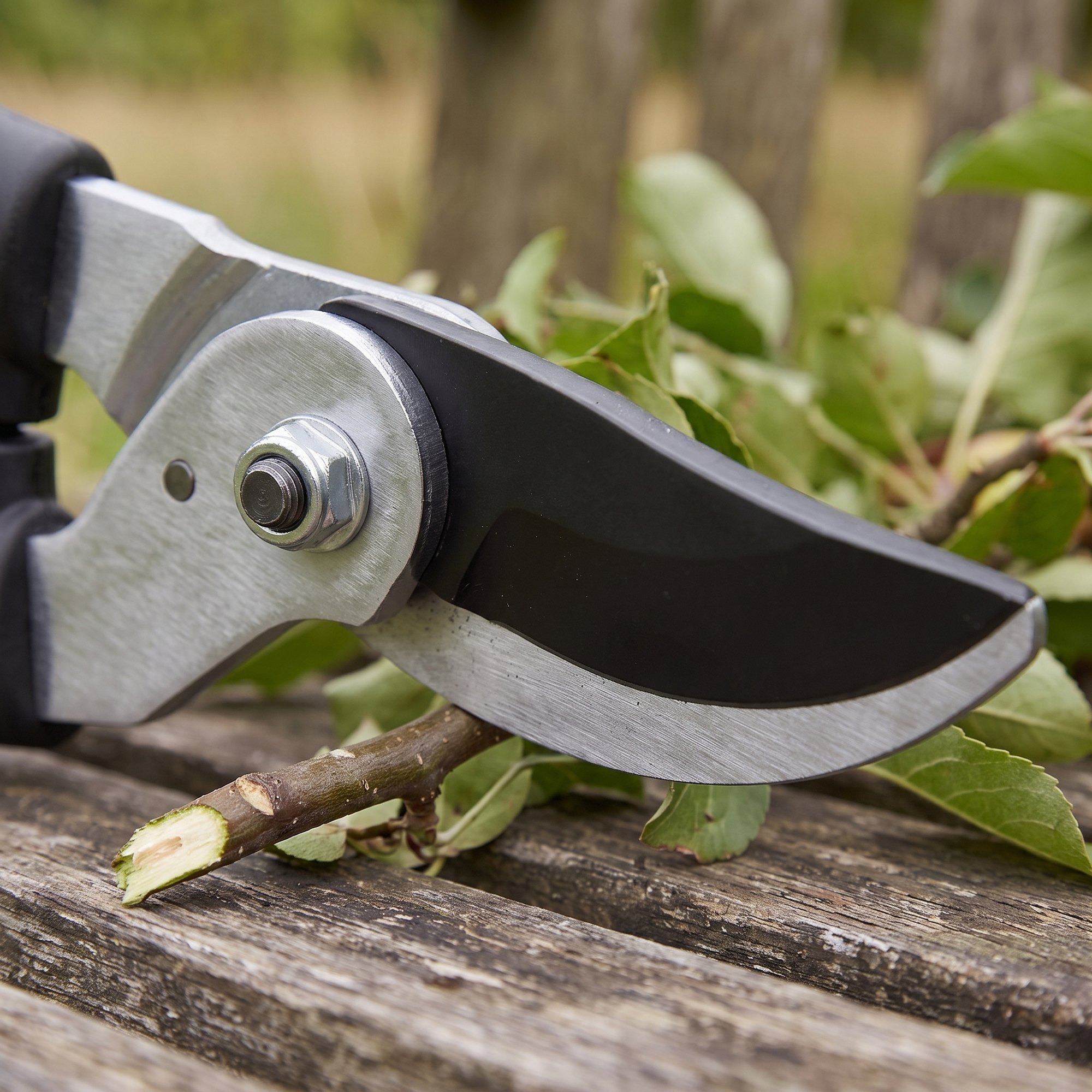
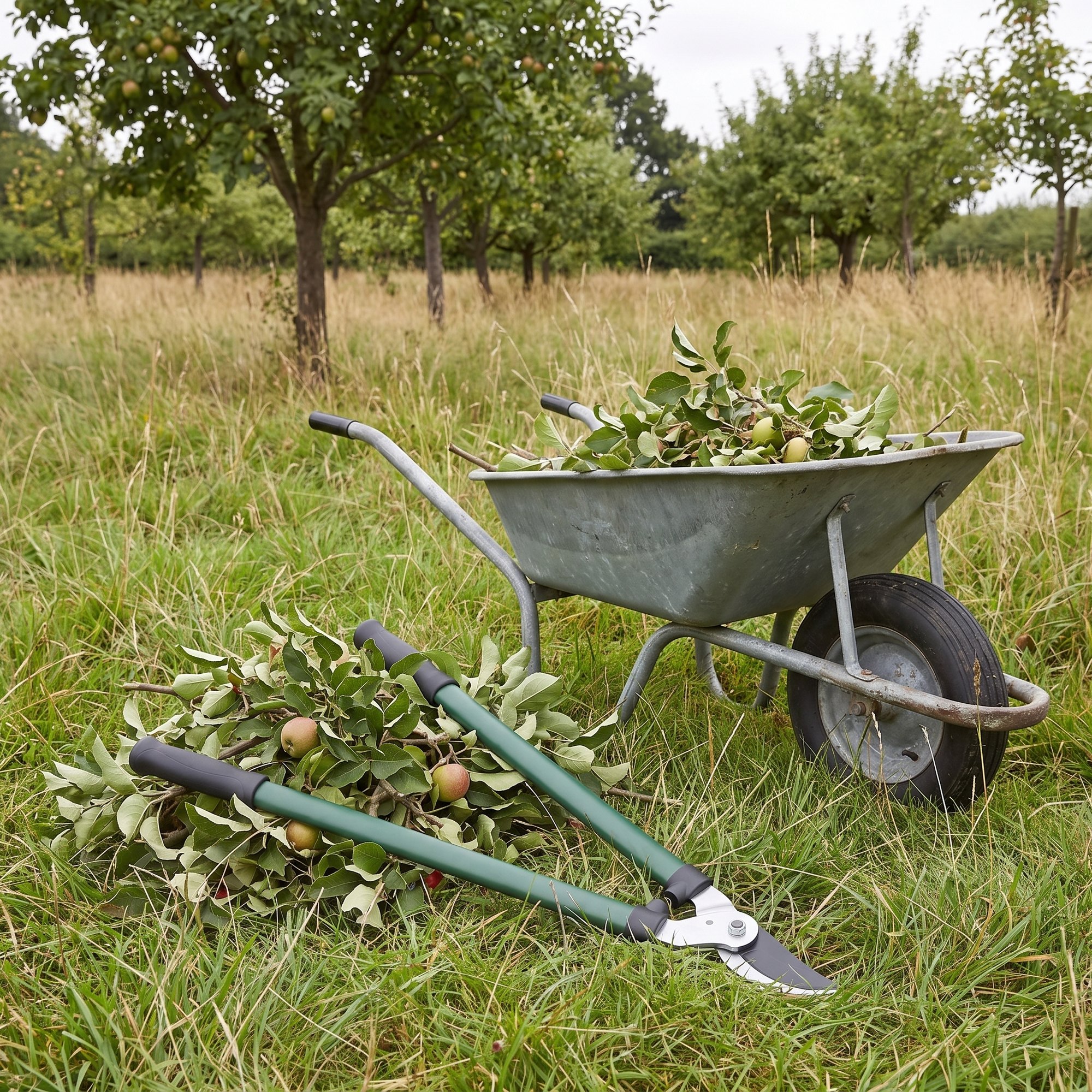
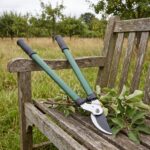
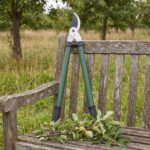
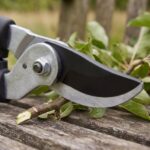
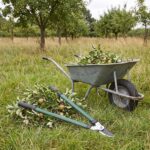
A bypass lopper cuts the way scissors do – a curved blade passing a fixed hook – which leaves a clean face on live wood instead of the crushed stub an anvil head produces. That matters on anything you want to keep: fruit trees, shrubs, roses and young ornamentals all heal faster from a bypass cut.
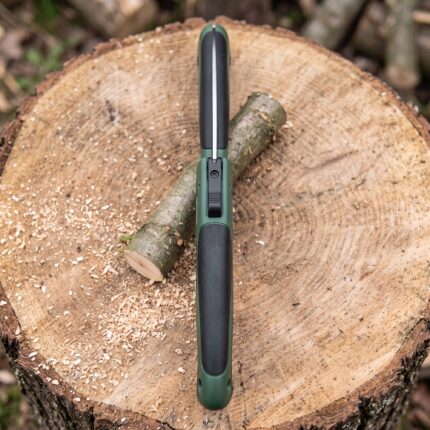
The Timberline takes live wood up to 1 3/4 in. The 32 in. tubular aluminium handles give you enough leverage to do that without both feet planted, and they weigh 3.1 lb in total, so you can hold them out at arm’s length into a shrub without your shoulders giving out first. The grips are moulded, not slipped-on rubber tubes, so they do not spin when the cut is tight.
The blade is high-carbon steel, heat treated and given a low-friction coating so sap wipes off rather than gumming the pivot. A shock-absorbing bumper takes the jar out of the closing stroke, and the blade, the hook and the bumper are all replaceable.
Specifications
| Overall length | 32 in. |
|---|---|
| Cutting type | Bypass |
| Cutting capacity | Live wood up to 1 3/4 in. |
| Blade | High-carbon steel, heat treated, low-friction coating |
| Handles | Tubular forged aluminium, moulded grips |
| Bumper | Shock-absorbing, replaceable |
| Weight | 3.1 lb |
| Dimensions | 32 x 8 x 2 in. |
Care
Wipe the blade after every session and rub a drop of light oil along the bevel; dried sap is what makes a lopper feel stiff and blunt. Sharpen with a fine diamond file on the outer face of the cutting blade only, following the original angle – never file the hook. Store it closed and dry, and check the pivot bolt is snug at the start of each season.
Reviews
There are no reviews yet.